Why Room Labels Can Work Against You
The rooms in most homes are named for a single purpose - bedroom, dining room, living room - but real life rarely respects those labels. A bedroom holds workout gear, work documents, and charging stations. A dining table becomes a homework station, a mail drop, and a craft surface. When your organization system is built around room names rather than actual activities, things end up stored wherever there's space, not where they're used.
The result is friction: hunting for scissors in three different drawers, carrying supplies back and forth across the house, and never quite feeling like anything is truly in its place. The Zone Method addresses this by reframing the question. Instead of asking where does this room suggest this item should go?, you ask what activity does this item support, and where does that activity happen?
Before you begin setting up any system, it's worth understanding why sequence matters. Our guide on decluttering before organizing explains why clearing out excess items first makes any organizational approach - including zoning - significantly more effective.
How to Identify Your Home's Natural Zones
Most homes already have informal zones - places where certain activities naturally happen. The zone method makes those patterns intentional rather than accidental. A practical way to start is to observe your household for a week and note where specific activities actually occur, not where you think they should occur.
Common functional zones in most households include:
- Entry/Exit Zone: Keys, bags, shoes, outerwear, and anything that travels in and out daily
- Meal Prep Zone: Cooking tools, pantry items, and frequently used appliances - centered on the kitchen workspace
- Paper Management Zone: Mail, bills, school forms, and documents - ideally near where you open mail
- Work or Study Zone: Computer, chargers, notebooks, and reference materials
- Laundry Zone: Detergent, stain removers, and laundry accessories kept at the point of use
- Kids' Activity Zone: Art supplies, homework tools, and frequently used toys in an accessible, contained area
Each zone doesn't need to be a whole room - it can be a shelf, a drawer set, a corner of a countertop, or a rolling cart. What matters is that everything within the zone belongs to the same activity. For help applying this logic specifically to garages, see our article on garage organization.
23 min
Average time per day spent searching for misplaced items
Frequently cited in productivity and organization research as a common household time cost, though estimates vary by study and household size.
80%
Of clutter stems from disorganization, not lack of space
A commonly referenced estimate in professional organizing circles, highlighting that spatial redesign often matters more than acquiring new storage.
Setting Up Zones Without Buying New Storage
A common misconception is that effective organization requires purchasing bins, shelves, and specialized products. For most households, the first step is simply reassigning the space and storage you already have - moving items from where they've defaulted to where they're actually used.
Start with your highest-friction zone: the area of your home where you most often can't find what you need or spend time putting things back in the wrong place. Empty that space, sort items by the activity they support, and return only what belongs to that zone's function. Items that belong elsewhere get relocated to their correct zone.
Start With a Single Zone, Not the Whole House
Attempting to zone an entire home at once is overwhelming and rarely sticks. Choose the one area that causes the most daily friction - often the entryway or kitchen counter - and get that zone working smoothly before moving on. A successful small zone builds both confidence and a clear template for the next one.
Once zones are established physically, the next challenge is maintaining them - which is a behavioral question as much as a spatial one. Our article on habits over hardware explores the daily routines that keep organizational systems functioning long-term. It's also worth considering complementary strategies like the one-in, one-out rule to prevent zones from becoming overloaded over time.
Zones in Shared and Multi-Use Spaces
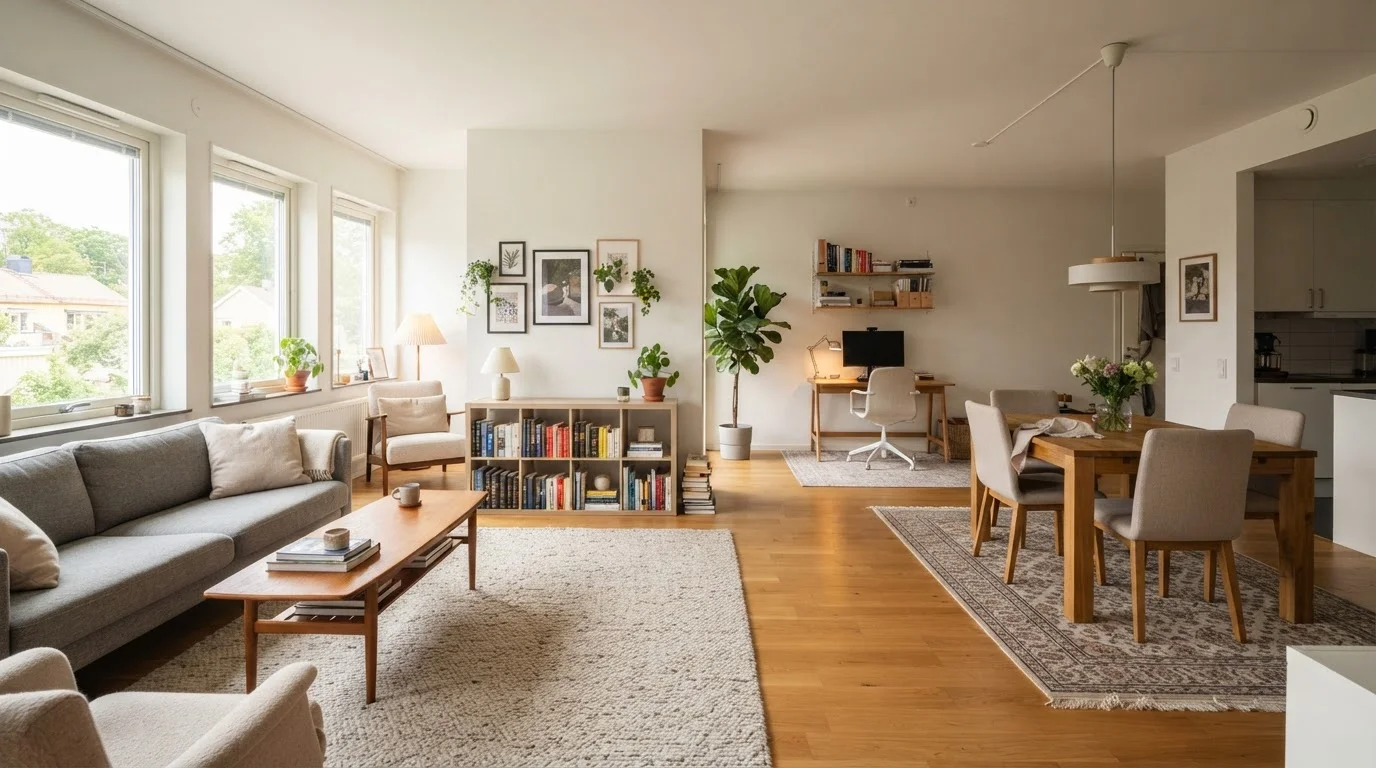
Open floor plans, studio apartments, and homes shared between multiple people present real zoning challenges - but they're also where the method shows its value most clearly. When a single room serves five functions, visual and physical boundaries help each occupant understand where things belong.
Rugs, shelving units, and consistent container placement can all signal zone boundaries without walls. A rug under a desk chair marks a work zone; a basket on a shelf edge signals the boundary of a reading area. These cues work particularly well for children, who benefit from clear, visual indicators of where toys, school supplies, and personal items live.
In homes with multiple occupants, agreed-upon zones reduce conflict over shared surfaces. Each person or activity has a defined footprint, which limits the sprawl that makes shared spaces feel chaotic. See our guide on organizing a home with multiple occupants for strategies tailored to households with different clutter tolerances.
Keeping Zones Functional Over Time
Zones drift. A work zone accumulates coffee mugs; a laundry zone absorbs random household items with nowhere else to go. This is normal - the goal isn't perfection but a system that's easy to reset. Periodic zone audits (even a five-minute sweep at the end of each week) catch drift before it becomes entrenched clutter.
Seasonal changes are another common disruption. Items rotate in and out of active use throughout the year, and zones need to accommodate that. Our article on seasonal rotation covers practical strategies for keeping only current-use items in accessible zones while storing off-season items efficiently. For households with limited space, small-space organization principles offer guidance on making zone-based approaches work within a compact footprint.
The zone method works because it aligns your storage with your actual behavior - not with an idealized version of how rooms should function. Start with one zone, refine it, then expand. Incremental progress builds a system that reflects how your household genuinely lives.