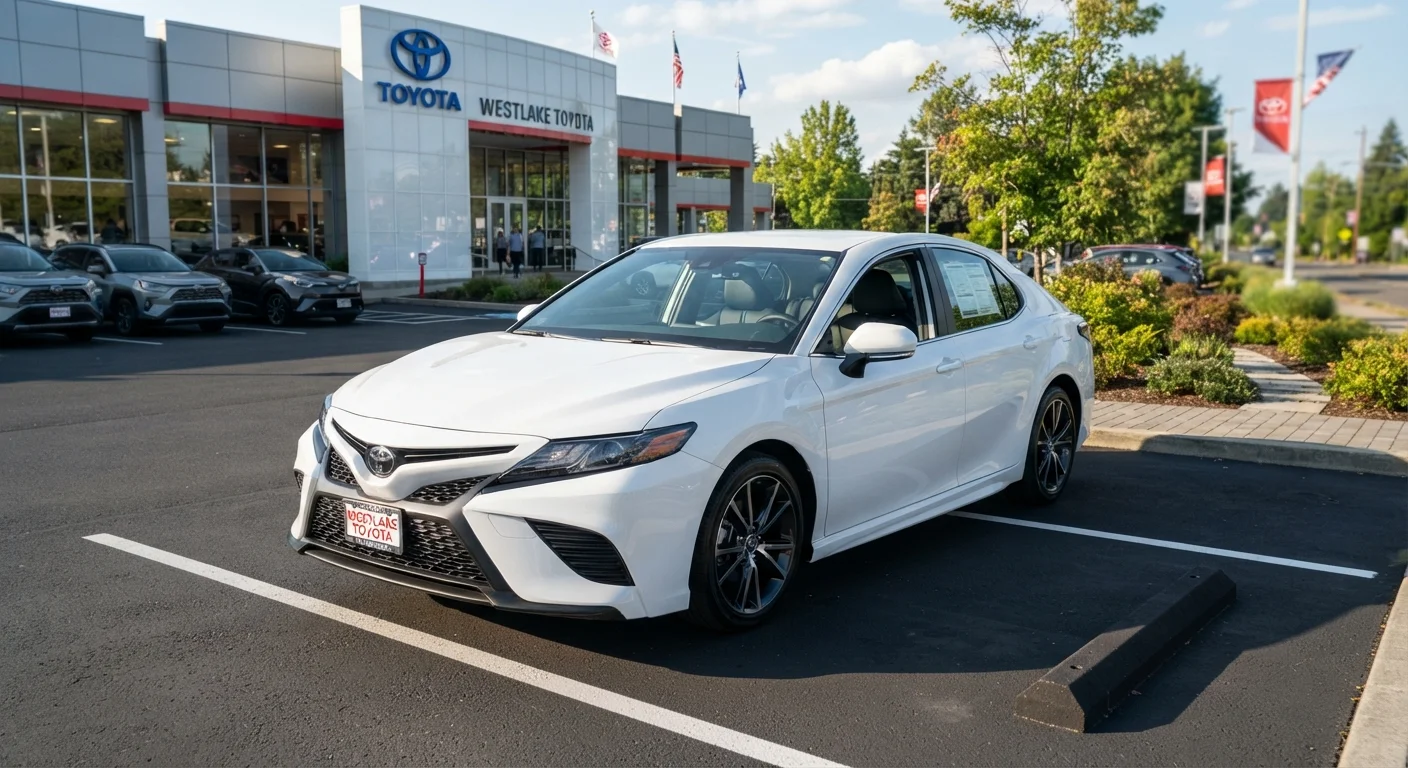
What You Actually Get When You Buy New
A new vehicle purchase isn't just about that new-car smell. It comes with a specific bundle of financial and practical protections that used vehicles rarely replicate fully. Understanding exactly what's in that bundle — and what it's worth — is the starting point for any honest evaluation.
The three core advantages that consistently separate new from used are factory warranty coverage, standardized modern safety technology, and known ownership history. Each matters differently depending on the buyer's situation, but all three reduce uncertainty in ways that carry real dollar value over time. For a fuller picture of how purchase price and ongoing costs interact, see the real total cost of owning a new car vs. a used one.
Full factory warranty from day one
New vehicles typically include a bumper-to-bumper warranty of three years or 36,000 miles and a powertrain warranty of five years or 60,000 miles, though terms vary by manufacturer. This coverage transfers repair-cost risk to the automaker during the most value-critical ownership period.
Standardized, current-generation safety features
New vehicles are built to the most recent federal safety standards and often include advanced driver-assistance systems as standard equipment. Buyers don't need to research whether a specific trim level added a feature — it's part of the known build.
Clean ownership history with no unknowns
A new vehicle has no prior accidents, deferred maintenance, or undisclosed use patterns. That certainty has real value: it eliminates the pre-purchase inspection cost and reduces the risk of inheriting a previous owner's neglect.
Access to lower financing interest rates
Automakers and their affiliated lenders frequently offer promotional financing rates on new vehicles — sometimes as low as 0% APR for qualified buyers. These rates are generally not available on used vehicles and can materially reduce total interest paid over the loan term.
Latest fuel efficiency and emissions technology
Newer powertrains, including hybrid and electric options, often deliver better fuel economy than older equivalents. For high-mileage drivers, lower fuel costs over years of ownership can offset a portion of the higher purchase price.
The Financial Drawbacks You Shouldn't Ignore
Buying new comes with a well-documented financial penalty: depreciation. A new vehicle typically loses a significant portion of its value within the first few years of ownership. That loss is realized the moment the car leaves the lot and accelerates through the early ownership period — a burden that used-car buyers largely avoid by letting someone else absorb it.
Higher insurance premiums, larger loan balances, and the psychological pressure of protecting a pristine asset are also genuine costs that don't appear on the window sticker. Buyers comparing new to used should factor all of these into a realistic monthly and annual budget. The case for buying used lays out where the alternative option tends to hold an advantage.
Rapid early depreciation erodes equity quickly
New vehicles can lose a substantial share of their market value within the first two to three years of ownership. A buyer who sells or trades in during this window absorbs that loss directly, often finding they owe more than the car is worth.
Higher sticker price requires larger financial commitment
The gap between new and comparable used pricing can represent thousands of dollars, translating into a larger down payment requirement or higher monthly loan payment. This limits options for buyers with tight monthly budgets.
Higher insurance premiums on a new vehicle
Insurers price comprehensive and collision coverage based on the vehicle's replacement value. A new car's higher value generally means higher premiums than an equivalent older model, adding to the total monthly cost of ownership.
First-model-year vehicles carry production risk
A newly redesigned model or a first-year release may carry unresolved engineering or manufacturing issues that only surface after wide deployment. Waiting for a second or third model year can improve reliability odds without sacrificing most of the new-car benefits.
Safety Technology: Why the Gap Between Model Years Matters
Federal safety standards evolve, and so does the technology that automakers bring to market. Automatic emergency braking, lane-keeping assist, blind-spot monitoring, and rear cross-traffic alert were once premium add-ons; on many new vehicles today, they ship as standard equipment. Buying new means accessing the most current generation of these systems rather than evaluating whether an older model has them at all.
This distinction matters most for buyers with specific safety priorities — those with young children, frequent highway commuters, or anyone who places high value on driver-assistance features. It's worth noting that safety technology alone doesn't make a vehicle safe; proper maintenance and driver behavior remain the dominant factors. Still, a new vehicle's safety suite is a known quantity in a way that a used vehicle's often isn't.
91%
New cars with standard automatic emergency braking
According to the Insurance Institute for Highway Safety, automatic emergency braking became standard on virtually all new passenger vehicles sold in the US by the early 2020s under an industry voluntary commitment.
~20%
Typical value lost in first year of ownership
Industry data consistently shows new vehicles can depreciate roughly 15–25% in their first year, with the steepest drop occurring immediately after purchase — a key factor in total cost of ownership calculations.
How to Decide Whether New Is Right for You
The case for buying new is strongest when several conditions line up: you plan to own the vehicle for seven or more years (spreading the depreciation hit across a longer period), your credit score qualifies you for a low interest rate, and you place genuine value on warranty coverage and predictable repair costs. The math shifts against new when your budget is tight, your expected ownership period is short, or a comparable used model exists with clean history.
Certified pre-owned (CPO) programs occupy a middle ground worth considering. They restore some of the warranty and inspection benefits of buying new while offering a lower entry price. New car vs. certified pre-owned breaks down where each option tends to provide more room for negotiation. For buyers who want a structured framework covering all the key variables, the complete new vs. used decision framework walks through the full set of factors.
Financing Rate Comparisons Take Time
Promotional new-car financing rates are not always available to every buyer — they depend on credit profile, model, and the lender's current offers. Before assuming a low advertised rate applies to your situation, get pre-approved through your own bank or credit union as a baseline. Comparing that rate against the dealer's offer gives you an objective measure of actual savings. For more on navigating loan options, the Financing & Loans hub covers key terms and strategies.