Why New Cars Lose Value So Quickly
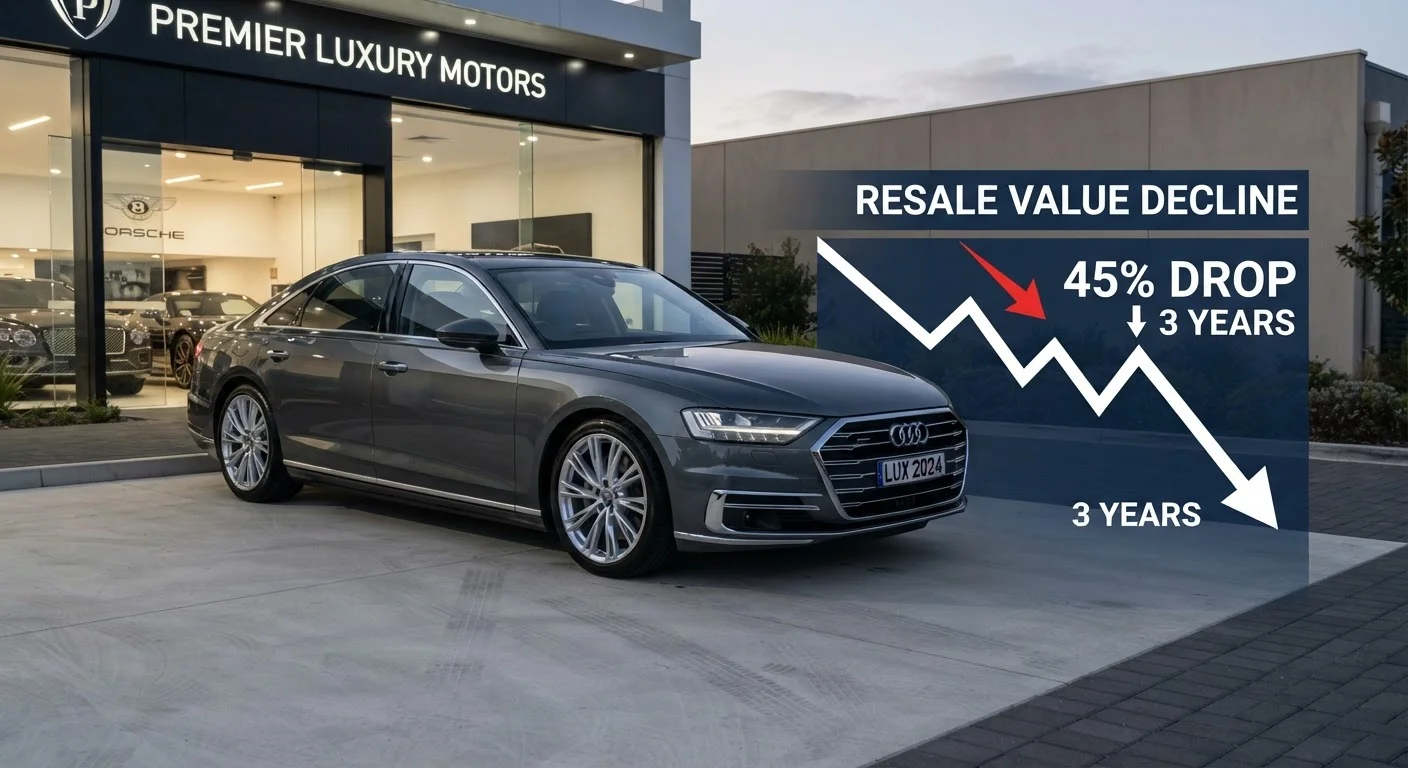
The sharpest depreciation hit happens the moment a new car is driven off the dealership lot. At that point, the vehicle transitions from new to used in the marketplace - and used cars command a lower price than new ones, regardless of condition. This initial drop can represent several thousand dollars before the car has traveled a single mile under owner ownership.
Two forces drive rapid early depreciation. First, the retail markup built into a new car's price - including dealer margin and manufacturer pricing - evaporates immediately in the resale market, where buyers compare against other used options. Second, perception plays a role: a one-year-old car competes with brand-new models offering the latest features and full warranty coverage, which pushes its resale price down further.
After the first year, depreciation continues but at a slower rate. By years two and three, the curve begins to flatten. By year five or six, many vehicles have stabilised to a slower, more gradual decline. Understanding this curve matters because it directly affects the true cost of ownership - not just what you pay at purchase, but what you lose over the time you own the vehicle.
~20%
Average first-year value loss for new vehicles
Industry estimates from sources such as Edmunds and Kelley Blue Book suggest new cars lose roughly 15-25% of their value in year one, varying by segment and brand.
~50%
Typical value retained after five years
Many new vehicles retain approximately half their original purchase price after five years, according to widely cited automotive resale research.
Year 1-3
Period of steepest depreciation
The first three years of ownership represent the sharpest portion of the depreciation curve for most consumer vehicles sold in the US market.
What Determines How Fast a Specific Vehicle Depreciates
Not all vehicles depreciate at the same rate. Several factors influence how well a car holds its value over time:
- Brand and model reputation: Vehicles with a strong track record for reliability and longevity tend to hold value better in the used market. Buyers are willing to pay more for a used vehicle they trust.
- Market demand: Trucks, SUVs, and certain vehicle categories with consistently high consumer demand typically depreciate more slowly than sedans or niche segments with thinner resale markets.
- Fuel economy and running costs: As fuel prices shift, vehicles with strong fuel efficiency tend to retain demand - and therefore value - more reliably over time.
- Original price point: High-end luxury vehicles often depreciate faster in dollar terms because their elevated sticker prices have further to fall. A luxury sedan that cost $80,000 new may lose more in absolute dollars than an economy car that cost $25,000, even if the percentage drop is similar.
- Trim level and options: Popular configurations with widely desired features hold value better than unusual trims or colors with limited appeal.
For a broader look at how depreciation fits into total ownership math, see our guide to the real total cost of owning a new car versus a used one.
How Depreciation Shapes Your Buying Decision
Depreciation is not just an abstract concept - it has direct financial consequences depending on when and how you buy. If you purchase a vehicle new and sell or trade it within three years, you bear the steepest portion of the depreciation curve. If you finance that purchase, you also risk being underwater on the loan - owing more than the car is currently worth - which limits your flexibility.
Buying a vehicle that is two to four years old lets you sidestep the sharpest value loss. The previous owner has already absorbed it. This is one of the primary financial arguments for buying used, explored in more detail in our overview of the case for buying used. At the same time, new vehicles offer warranty protection and the latest safety technology - real advantages that have their own value, as outlined in our look at the case for buying new.
A certified pre-owned (CPO) vehicle often represents a middle ground - used enough to have absorbed initial depreciation, but inspected and backed by a manufacturer warranty. Our comparison of new versus CPO pricing breaks down where the value differences actually show up.
The right framework considers your planned ownership length, financing situation, and how much the initial depreciation hit matters to your overall budget. Our complete decision framework for budget-conscious buyers walks through each of these factors in full.
This article provides general financial education about vehicle depreciation and is not personalised financial or investment advice. For decisions specific to your financial situation, consult a qualified professional.